long tail cast on

When I learned how to knit, the long tail cast on was the one that I had been shown. And for almost 30 years I had been blissfully unaware that there was another zillion of cast on methods.

Despite my then following ignorance of the qualities of some of the other methods (cable cast on or provisional come to my mind), I still use the long tail cast on for 99.9% of my projects as I find it strong and versatile. It is supposed to be done over two needles which makes it very stretchy, great for those lacy or stretchy projects, but if I want it a bit less loose (or if I am working with ridiculously big needles) then I will just use one needle.

For this tutorial, I have only used just one needle as I find it easier to get started. Once you understood the movement, you can do it over two needles.

I made this tutorial for my knitting class which is a mess healthy combination of English and continental knitting so it might look slightly weird to those of you who have learned knitting the continental way (considering my observations lately, it might actually be a German way rather than a continental but that is how it is called).

One last thing before we get started. Please remember that these pictures have been taken 3min before the all important football match. We will see if I will ever get the chance to replace them with better ones.

But for now, lets use what we have:

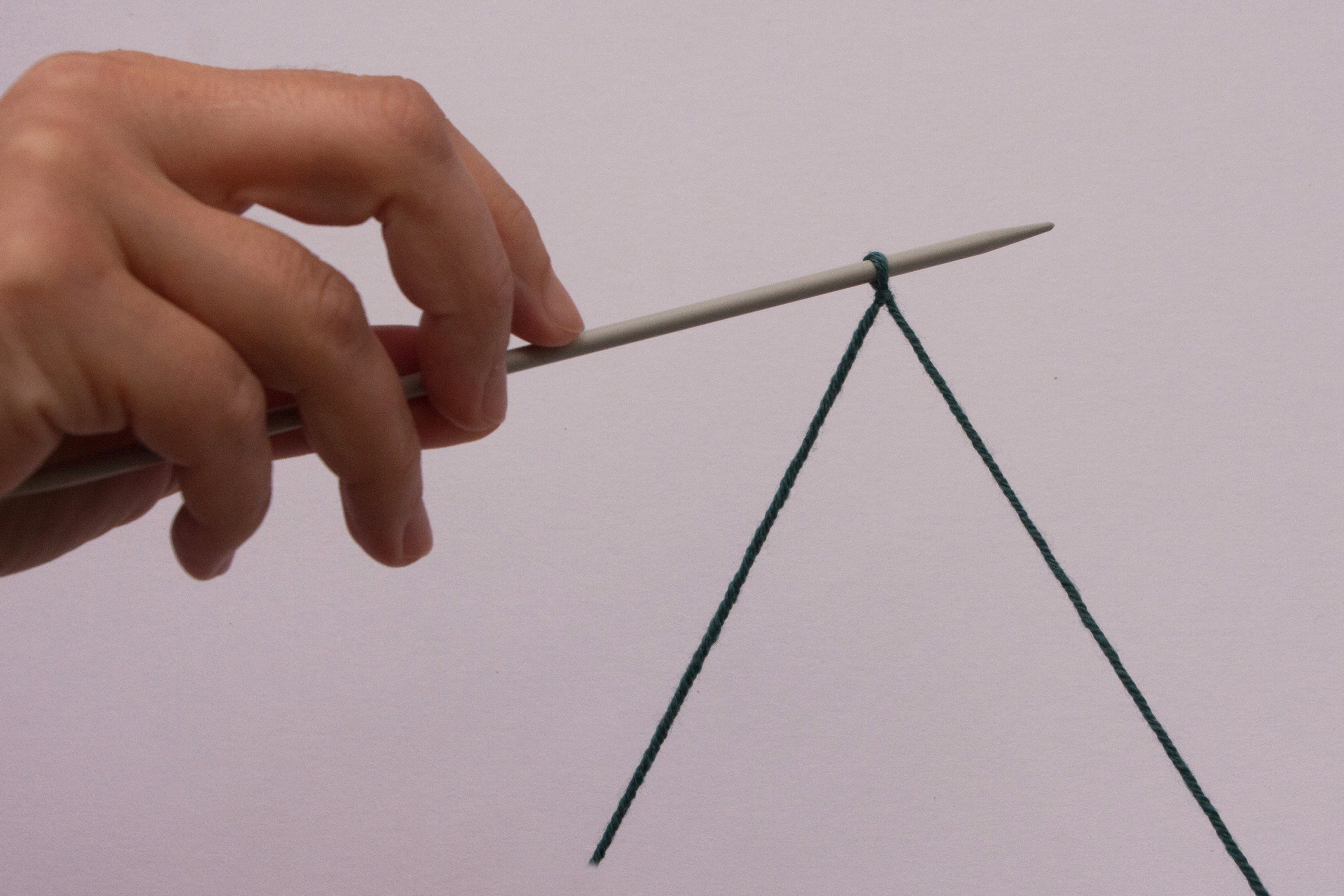
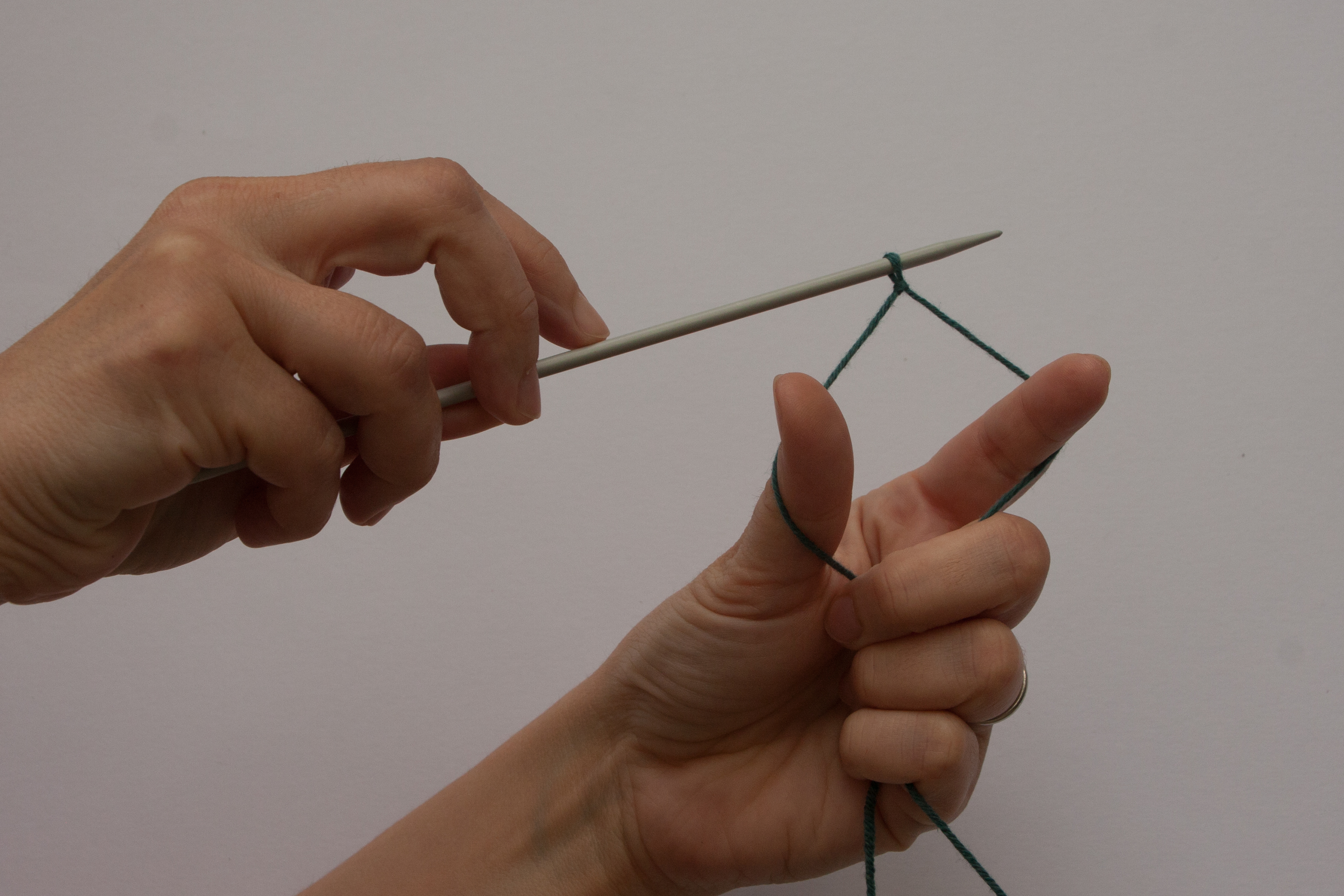
 1. Make a slip knot with a long tail end (the length of the tail will depend on the amount of stitches you will need) and put it on the needle. Hold the needle in the right hand, open the two tails up so they form a V- shape, the tail end comes towards you, the ball end goes away from you.long tail co 01

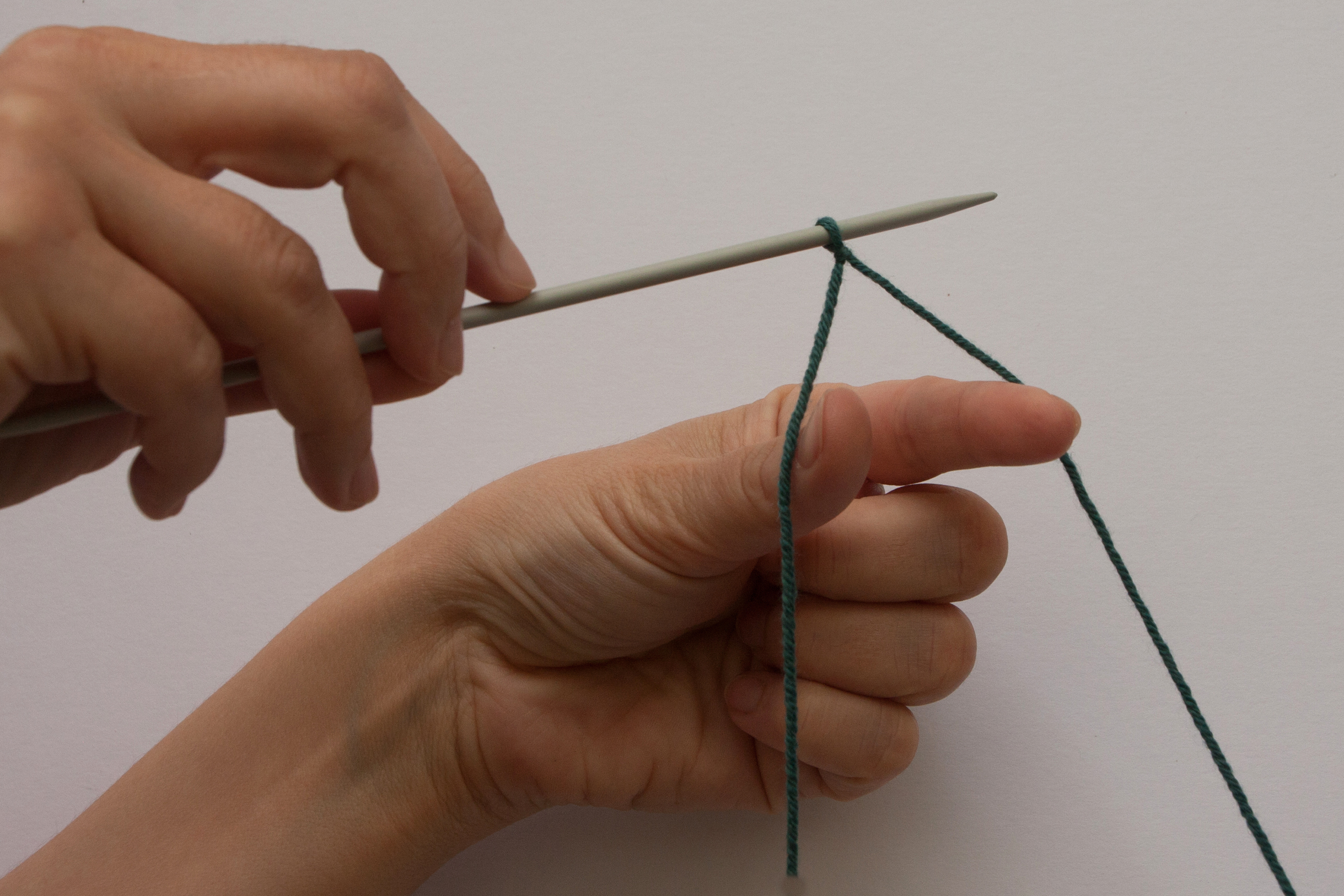
2. Slide the thumb and index finger of your left hand into the gap between the two strands and open the gap up a little bit.long tail co 02

3. Grab the two strands with the remaining three fingers and hold them tightly.long tail co 03

4. The needle with the slip knot should now be positioned between your thumb and your index finger. The tail end goes over your thumb (thumb strand), the ball end goes over your index finger (index strand).long tail co 04

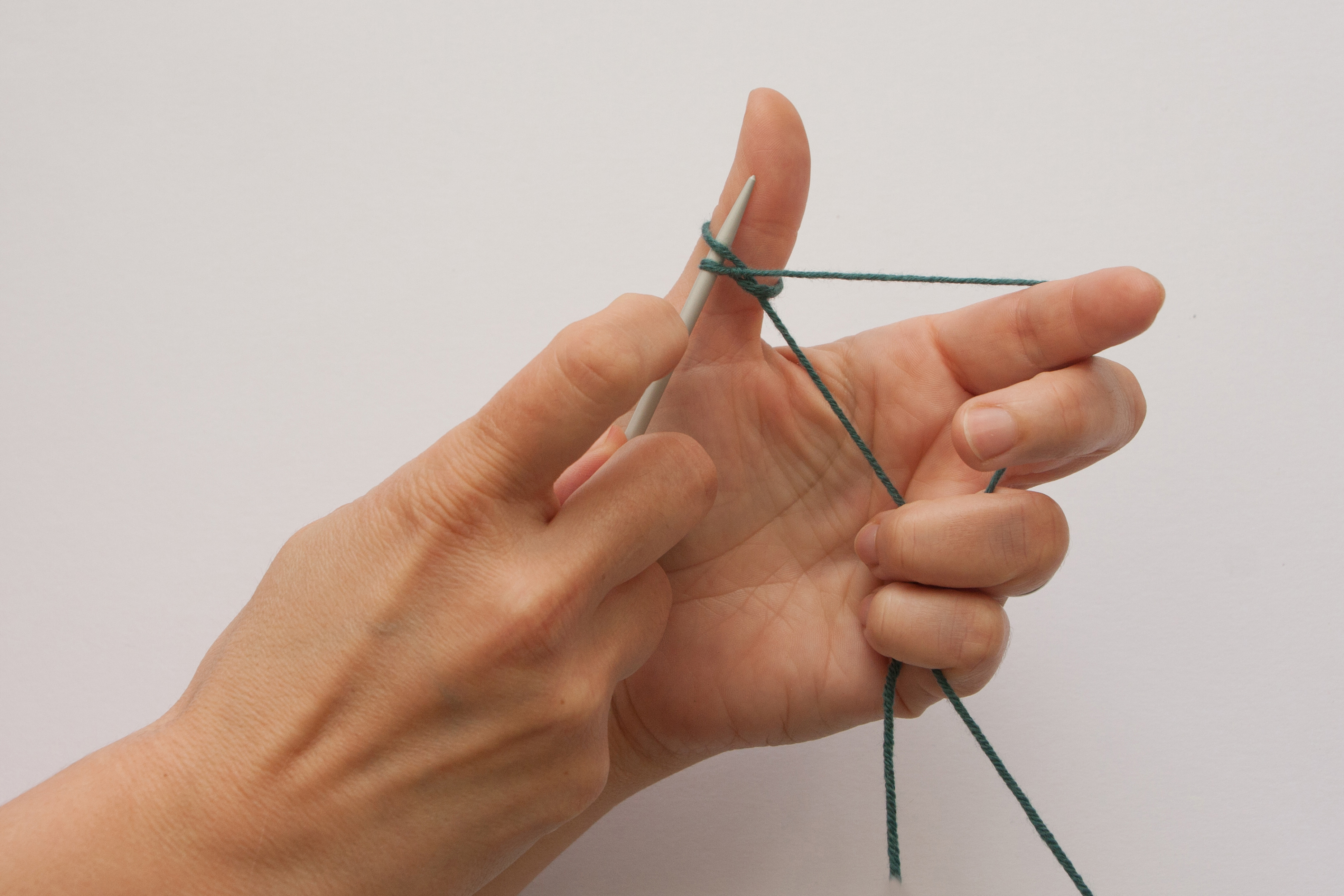
5. Pull the needle down so the thumb strand forms a full loop around your thumb.long tail co 05

6. Slide the needle from bottom to top through the thumb loop…long tail co 06

7. …grab the index strand and pull it through the thumb loop.long tail co 07

8. You have now a new stitch on your needle. Release the thumb loop.long tail co 08

9. Push the thumb strand down with your thumb to tighten the stitch but do NOT let go of the two strands.long tail co 09long tail co 10

Start again from Step 5 by bringing the thumb up again and pulling down the needle. If you are working on a small scale with small movements, this will result in a smooth circular movement of your thumb and you will not have to set up everything from scratch.

As I have mentioned before, you should do this over two needles held together. You will pull one out once you have finished the cast on. This will result in a very stretchy cast on, ideal for something that needs to be stretched out.

contintental knitting: posture of the left hand

Since I am in the awkward position to try to teach knitting in England without being able to actually knit the English way properly (and on top of that being convinced that MY way is the right way 😉 ), I have put together a couple of amazing pictures (never ask your husband to take pictures of your hand 5 min before the start of an incredibly important football match) to illustrate how I hold the yarn to get the right tension.

So, before we get started, you will have to practise, what I (as a new ballet mum) call: Position 1 🙂

IMG_2484

Your index finger goes straight up, as if you were telling someone off. Tips of the remaining fingers and the thumb touch each other.

Once you have mastered this position, you are allowed to try with a needle 🙂

The index finger is still up, the thumb and remaining fingers hold now the needle.IMG_2486

And this is how it would look with your knitting on the needle: IMG_2515
It is really crucial to keep that index finger up as you need a certain tension in the yarn between needle and index finger to be able to just grab and pull it through rather than wrapping it around.

So now lets see how to wrap the yarn around those fingers to get a nice tension but flow at the same time.

1. Open your left hand and and spread your fingers.


IMG_2489

2. Pull the tail end of your yarn (or the knitting on your needle) through the gap between the ring finger and the little finger – coming from the back of your hand to the palm. So  the ball end will be on the back of your hand, the tail end on the inside.

IMG_2490

3. Pull it now back between index finger and middle finger. The bit of yarn going over the inside of your ring and middle finger will actually be the place where you will automatically adjust the tension while knitting (by opening and closing your hand slightly), so it is crucial that this is on the inside of your hand and not at the back.


IMG_2491

4. Wrap the yarn twice around your index finger.IMG_2492

5. Keep your index finger up, either start casting on…IMG_2493

… or put the needle with your knitting in your left hand, making sure that you have a nice tension between needle and index finger. IMG_2516If that bit of yarn is loose, pull on the ball end to get it right. Don’t just wrap it around your index finger 50 times as it will stop the flow. And if you leave it loose you will have to wrap the yarn around your needle rather than just grab and pull it through which is the big advantage of continental knitting IMHO.

I guess, to properly show the advantages of continental knitting I should actually upload a video but for now that is all you’ll get. (Well, I have already some pictures of the long tail cast on, taken 3 min before the start of the famous football game so another post with amazing pictures will soon follow 🙂 )


Scrap Sunday – make up bag

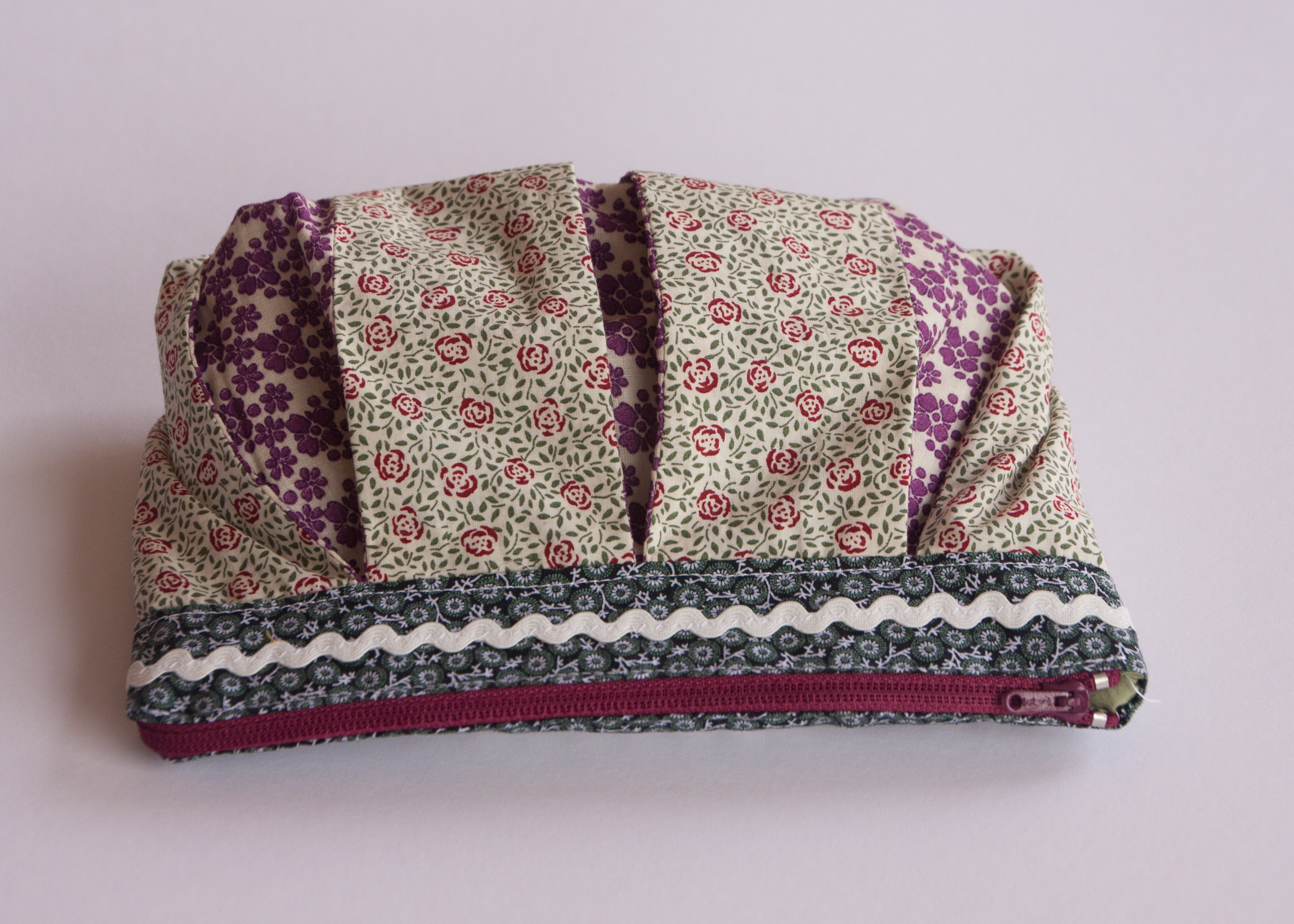
IMG_2479If you are following this blog since a while, you might think: Has she not been showing us that before? Is she reusing posts already in the second week of her challenge? No, I am not. But well done for recognising  the fabrics as I have used exactly those for my skirt a while ago 🙂

If, however, you have no clue what I am talking about, go back and read this blog properly, there might be a written exam next week!

So, I have used a lovely pattydoo pattern to make this little bag, entirely made of material I already had at home, even the zip was somewhere in my zip collection.

It really is made out of many little pieces and I will certainly make a few more of those, I think they make a lovely gift.

But I do have a little problem with it. (I can see some of you (you know who you are!) rolling their eyes about me being overly fussy about little details.)

Actually the box pleats aren’t shown off properly because it has a lining with interfacing which makes the inside rather stiff and strong. IMG_2480So even if you fill the bag with something, it will not pop out the pleats, which is a bit of a shame because you can not really see the fabric hiding behind the pleats unless you pull them apart (which I did for the first two pictures).

IMG_2481I think I have two options to get to my desired effect:

I could cheat and leave a little gap between the pleats so the background fabric always shows.

Or I leave out the strengthening interface and make the lining a bit bigger than the actual bag. So when it gets filled, there will be room to push out the pleats naturally. I think this is my first choice. It is only a small bag and not meant to hold heavy things anyway. So I will see how this goes and keep you updated.


“Cotton bag” is the new “designer hand bag” … or was it “jute bag”?

Cotton bags have definitely become a fashionable accessory and I am a proud owner of a zillion of them. From the Austrian country side butcher to the Notting Hill book shop – I have them all…. coming to think of it, the Austrian ones are all pretty old vintage whereas the fashion capital London does not hand them out since such a long time. Have we been trend setter, for once?

I do love cotton bags, they are great to keep my knitting or children’s change cloths clean yet breathable, you can put smaller things into your suit case without taking extra space, you can wash and reuse them, etc. etc. and of course they make you look trendy (for that purpose I would suggest the Notting Hill book shop one rather than the Austrian country side butcher)

I have already been sewing quite a few ones as my children’s nursery also seem to think that they are great to keep children’s change cloths in them.

Recently, I have made two for my children to keep their ballet equipment together and clean and since they have been a big hit I made another one for a little girl’s  5th birthday. They are really easy to make, and as an encouragement for those who would like to make things for their children but are a bit scared of their sewing machine, I put together a few pictures for a little tutorial:

Stofftasche 22

Before we get started:

I really like using contrasting colours or one patterned and one plain side which makes it also a great project to use up left overs. The remaining question would then be the thread colour. A contrasting colour is good if you believe in your sewing skills. Little imperfections are more visible then if you are using matching threads. I like to find one colour that links all the colours of my project. In this case, I went for white. It is a contrast to everything but as it is a neutral colour, it does not add to my overflowing colour pot. If you do not want to have very obvious seams, you’ll have to use matching colours, which will lead to a lot of thread changing. Your choice.

You’ll need:

  • fabric: 0.5m of cotton
  • sewing thread, scissors, pins and the usual stuff
  • iron
  • optional appliqué:
    • paper template (I printed out a letter font size 400ish)
    • fabric (I like using the same fabric as for the second bag side)
    • interface (I used a simple iron on one, there would be a more fancy fusible web with two sticky sides  to make positioning later a bit easier)
    • kitchen towel

 1. Cut out two pieces of fabric for your bag and two for the handles.Stofftasche 01
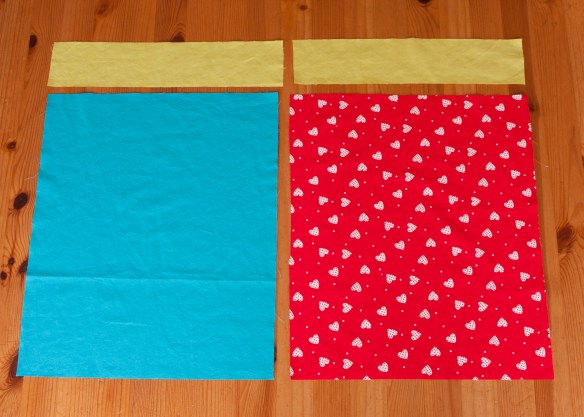
Dimensions: I have made my bag a bit shorter than most standard cotton bags as it was made for a child (which tend to be a bit shorter 🙂

This is how you calculate it, followed by my own example.

Sides:

  • desired width + 2x seam allowance: 32 + 2x 1.5 = 35
  • desired length + 1x seam allowance + 2.5cm for folded top line = 34 + 1.5 + 2.5 = 38cm

Handles:

  • 2x desired width + 1.5cm = 2×2 + 1.5 = 5.5cm
  • desired length + 8cm = 35cm

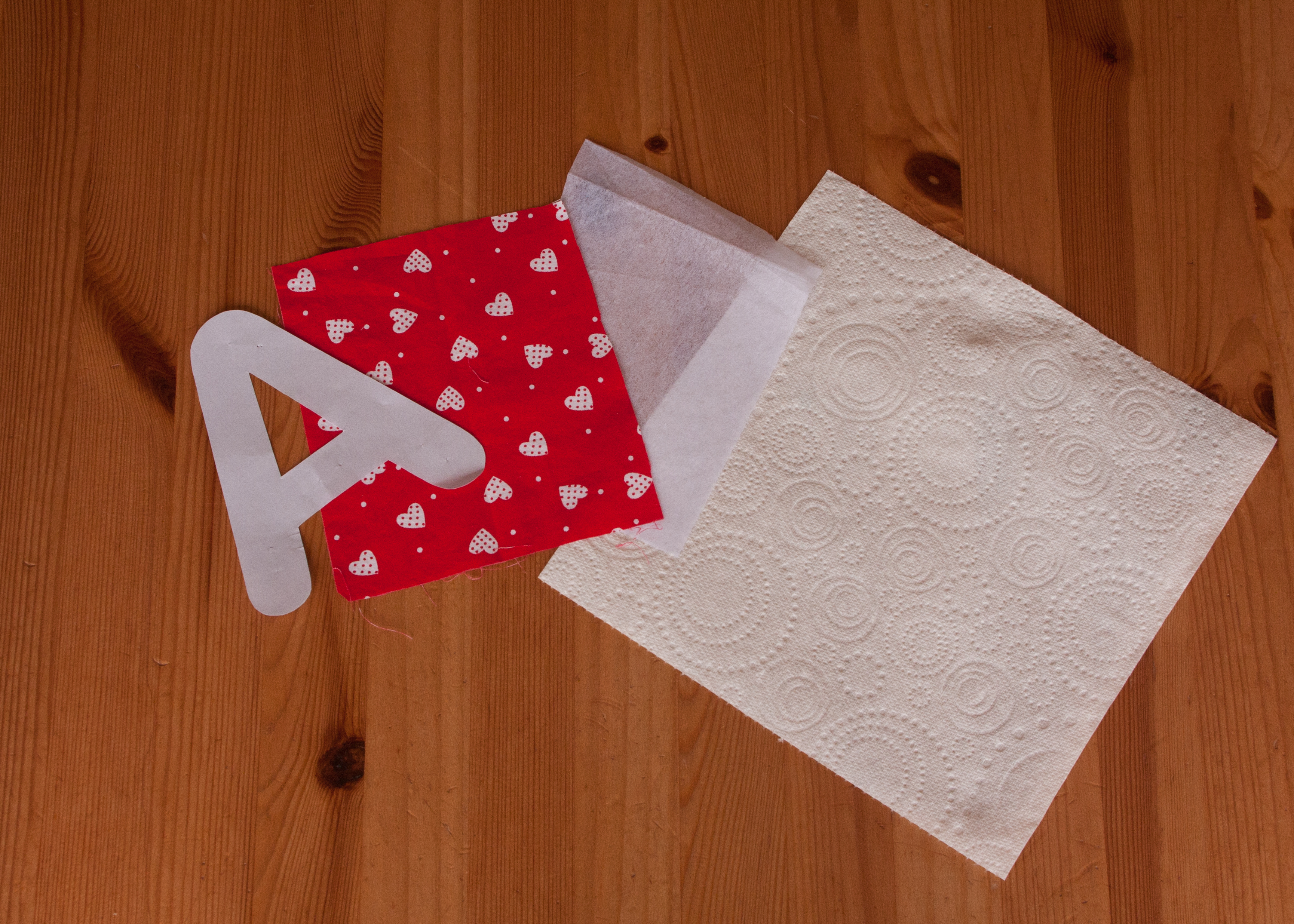
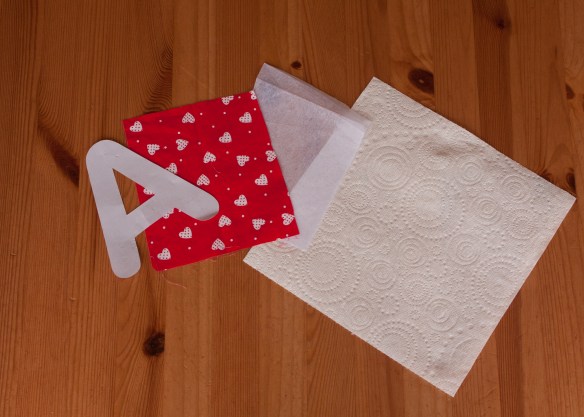
2. If you want to add an appliqué you will also need a paper template, a bit of contrasting fabric, some interfacing (or fusible web) and a kitchen towel (or a tear away backing).

If not, you can jump to Step 8 straight away. Stofftasche 02
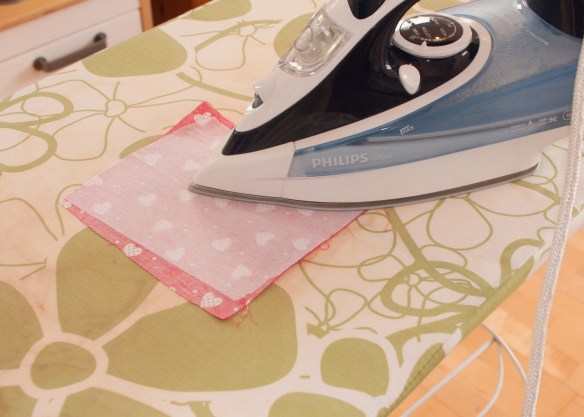
3. Iron the interfacing to the wrong side of your fabric (sticky side of interface on the fabric!). If you are using a fusible web, the paper side is up.Stofftasche 03
4. Pin your desired shape the right way onto the fabric side or the wrong way onto the paper of the fusible web and cut it out.Stofftasche 04

5. Position the appliqué on the bag fabric and pin it in place. I chose the center but the corner looks good, too. If you are using paper backed fusible web, pull the paper off and stick the appliqué onto the fabric.

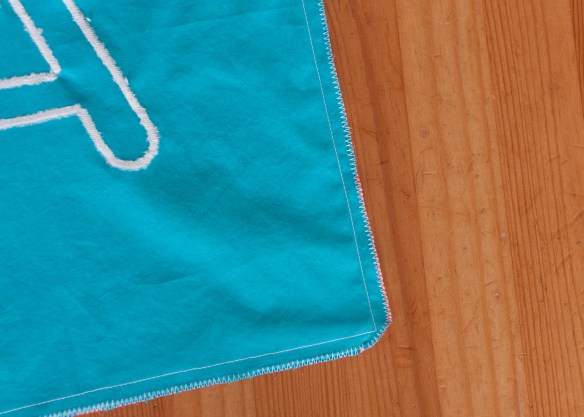
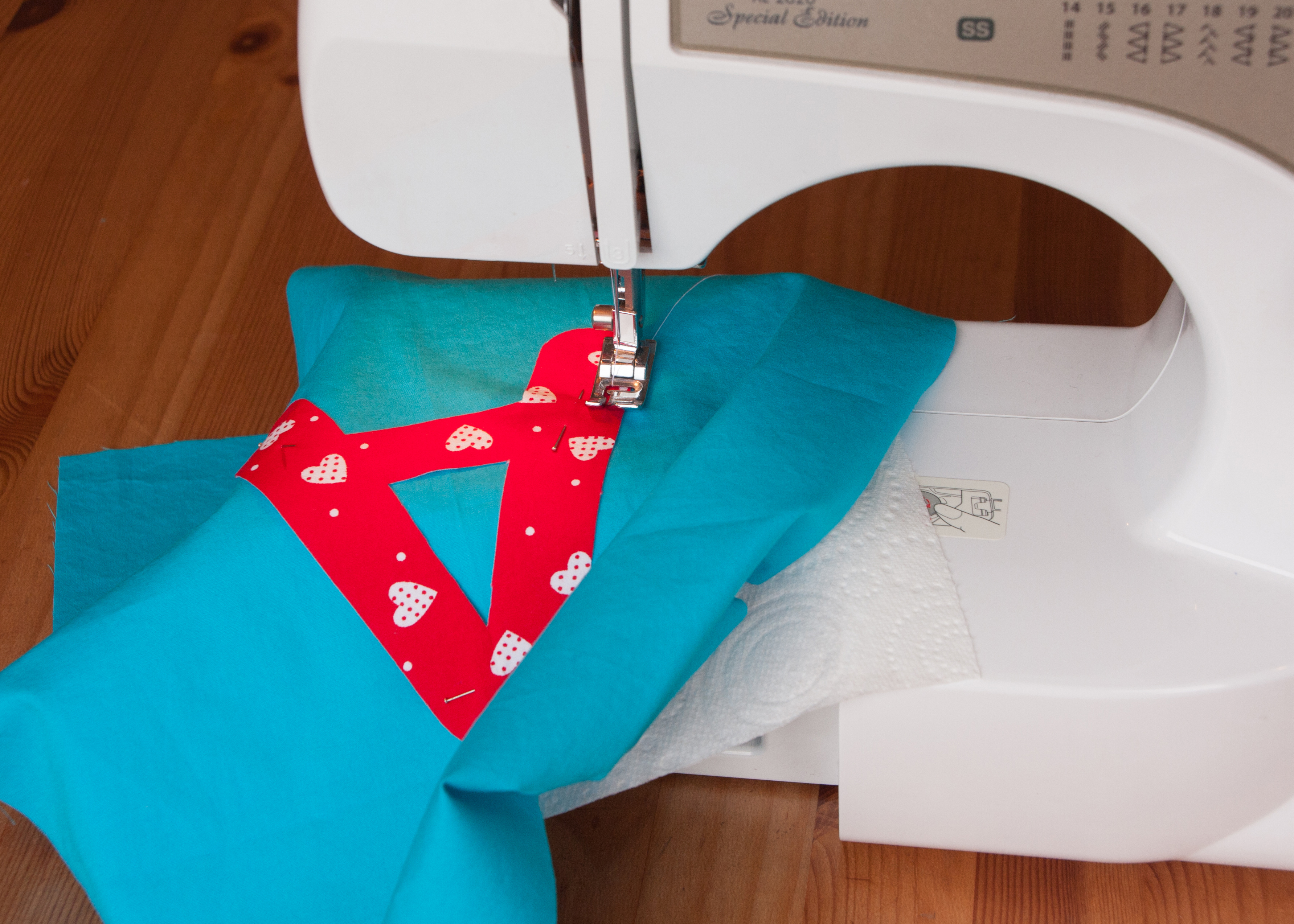
6. Put a kitchen towel (or fancy tear away backing) under the fabric – this will result in a neater stitch as it holds everything together – and sew the appliqué on using a wide zigzag stitch. Stofftasche 07
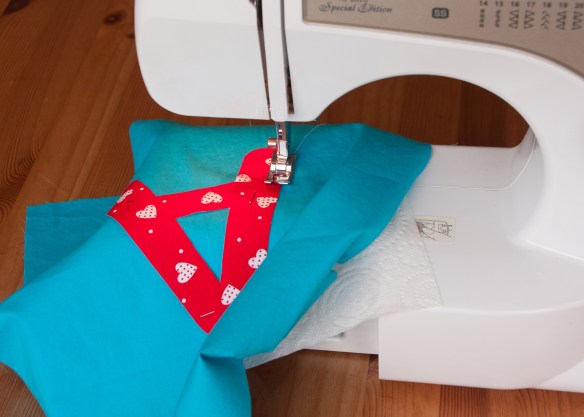
The zig goes through appliqué and fabric, the zag goes through the fabric only, just next to the appliqué. I usually use a rather small stitch length (almost as if I was sewing a button hole as I want to use it as a contrasting feature and to make it more secure (things for children get washed very often – at least in this house)Stofftasche 25
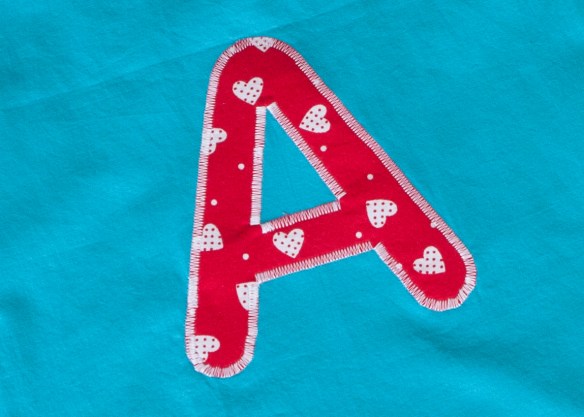
7. Carefully pull away the kitchen towel. The little bit stuck between the seem will come off in the first wash.

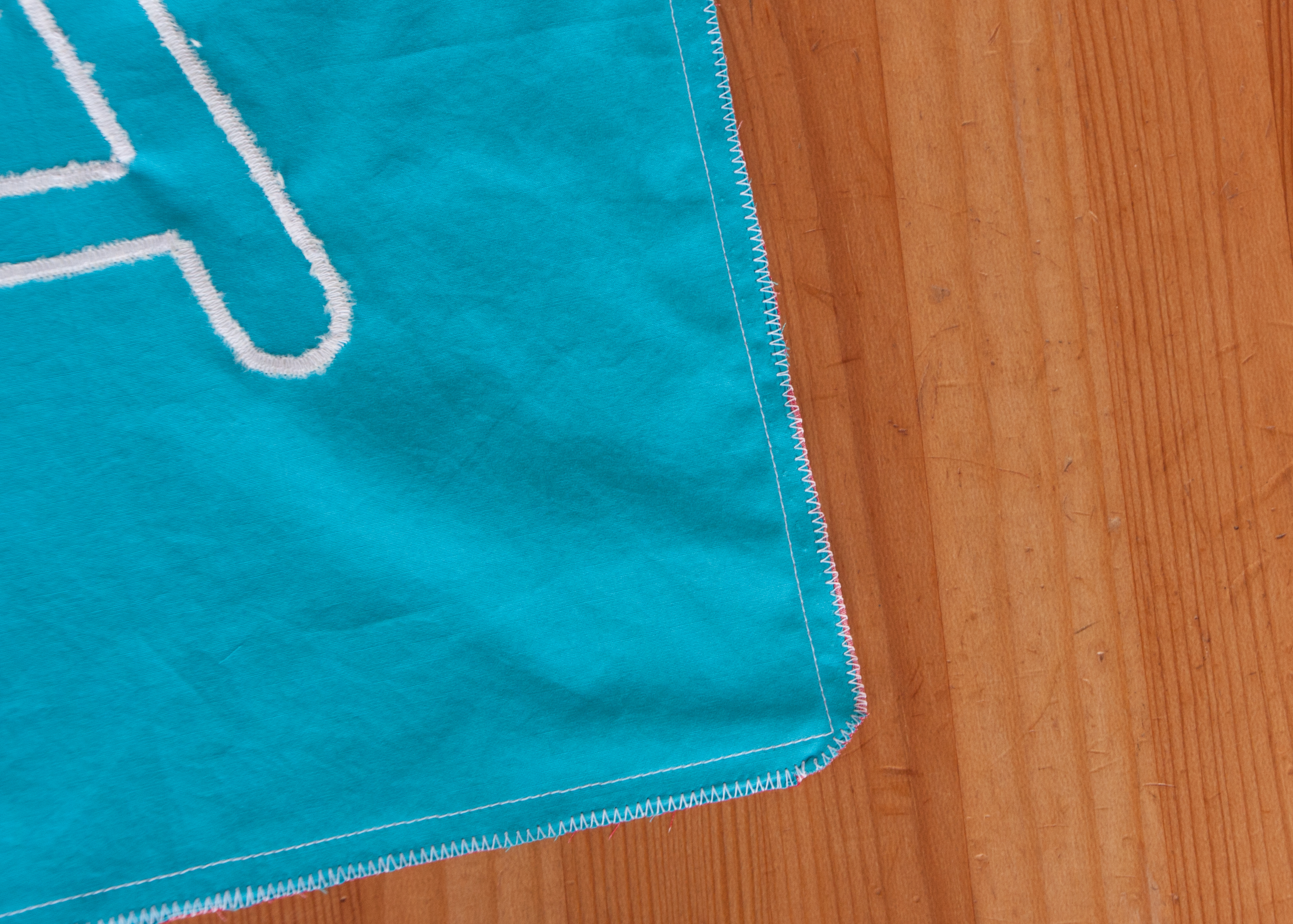
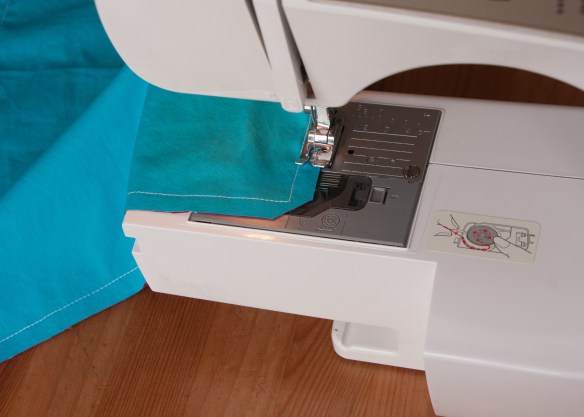
8. Pin the two sides of the cotton bag with the right sides together and sew along the two sides and the bottom. Shorten the two edges at the bottom of the bag and zig zag all around to secure the seams. (Usually you are supposed to cut off the edges after zigzagging but I am slightly security obsessed).Stofftasche 10Stofftasche 11
9. Now it is time to prepare the handles.

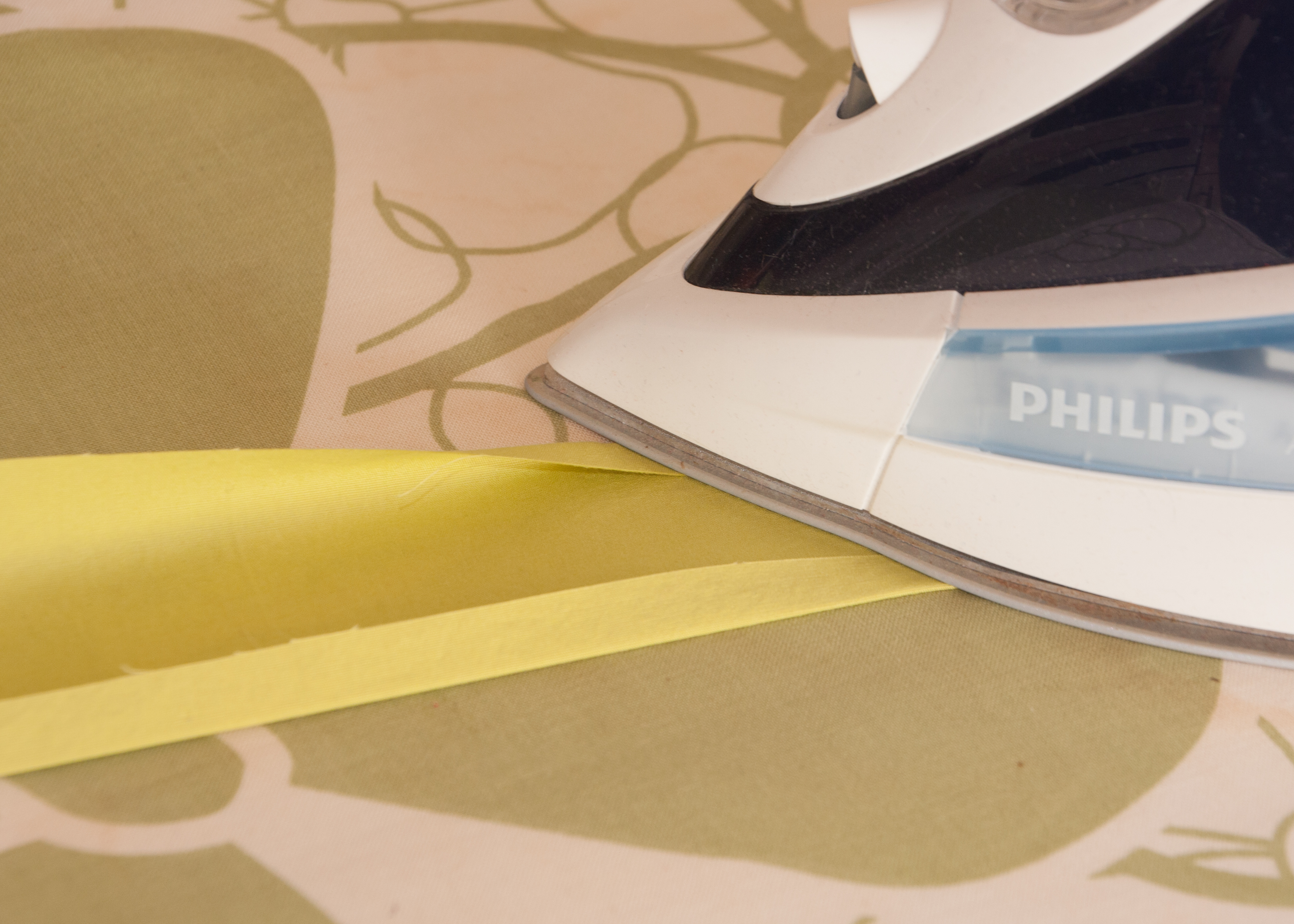
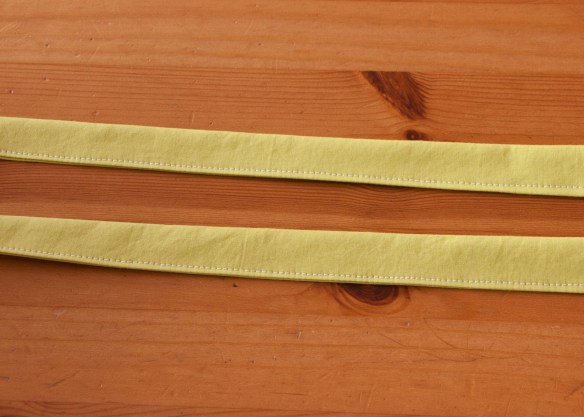
Put the fabric wrong side up onto the ironing board and fold both long sides 0.7mm and iron those edges.Stofftasche 12

10. Fold the fabric lengthwise in half and iron again.Stofftasche 13

11. Since you are already using the iron, take your bag(right side inside) and fold the open top twice. First 0,5mm, iron, fold 2cm and iron again. Stofftasche 15

12. Back to the handles. Close them by top stitching close to the folded edges.Stofftasche 14
13. Place the open ends of the first handle into the opening of your folded top line, right up to the top. Make sure you are positioning it centrally.Stofftasche 16
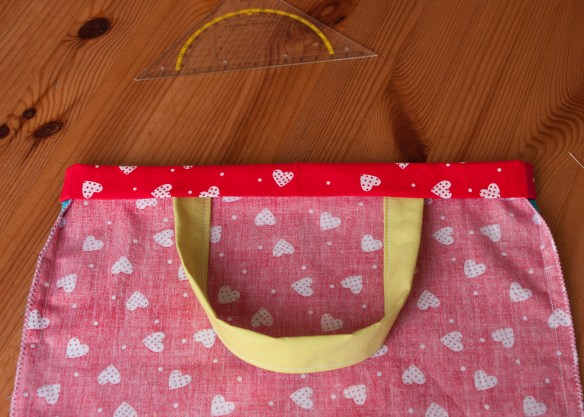
14. Now fold it up carefully and pin in place.Stofftasche 17Repeat this with the second handle.
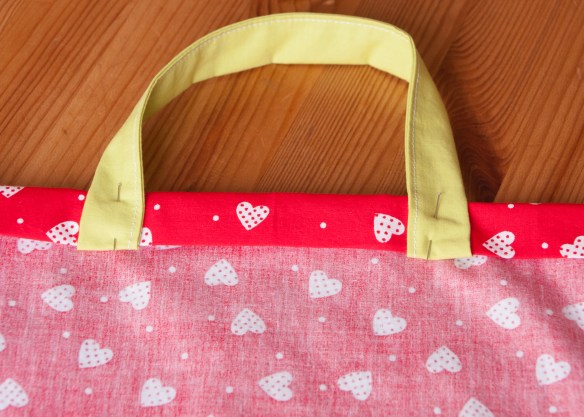
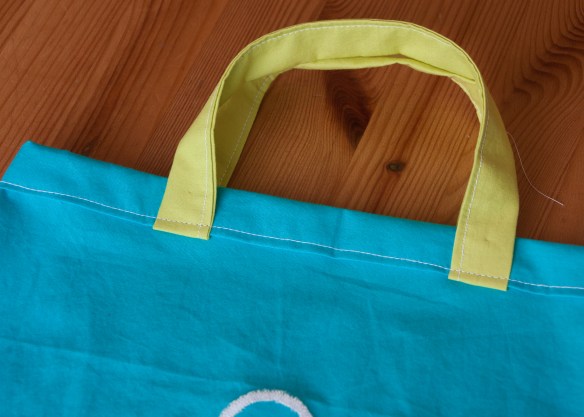
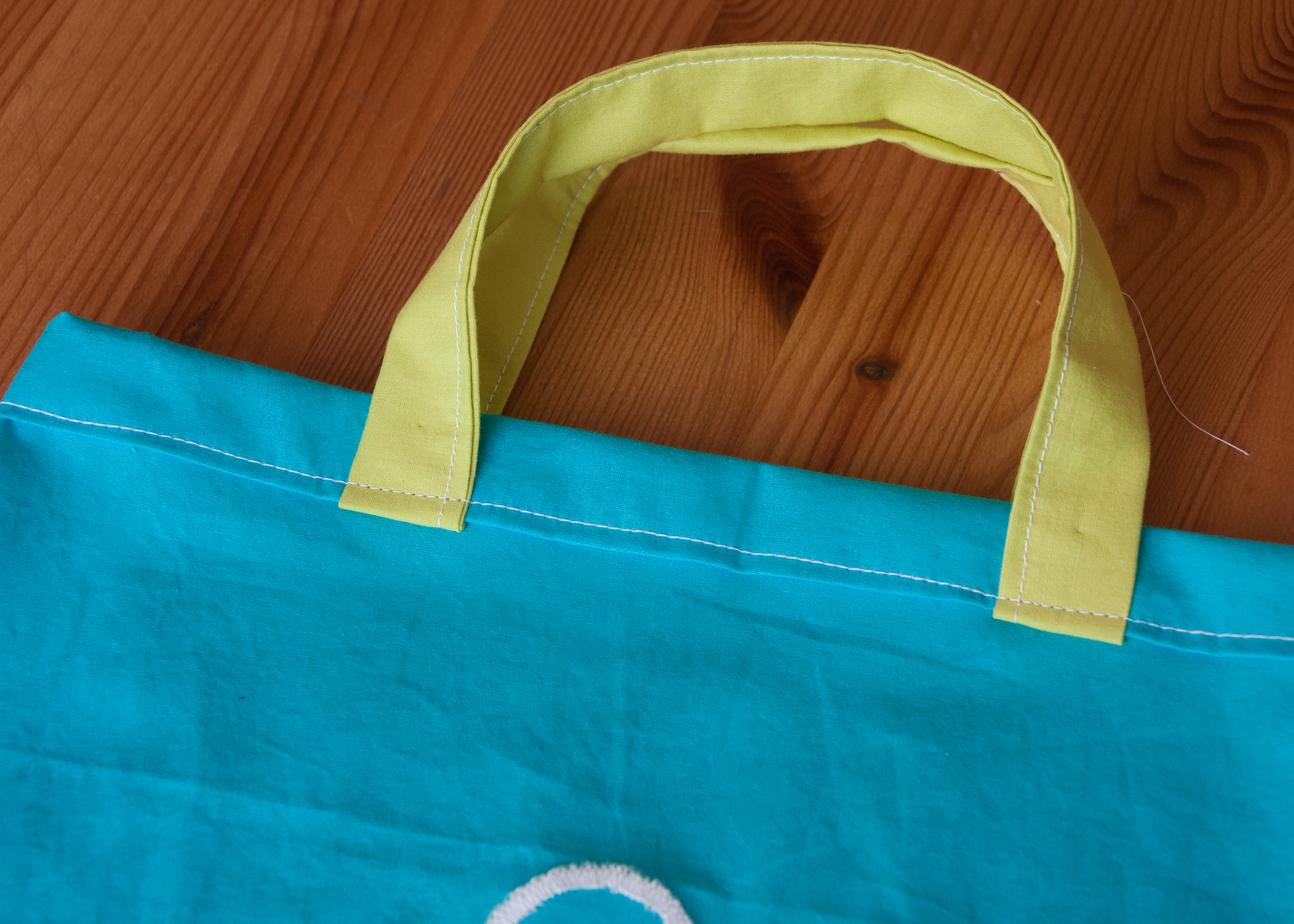
15. Top stitch around the whole opening, close to the folded edge and over all your handle ends.Stofftasche 18
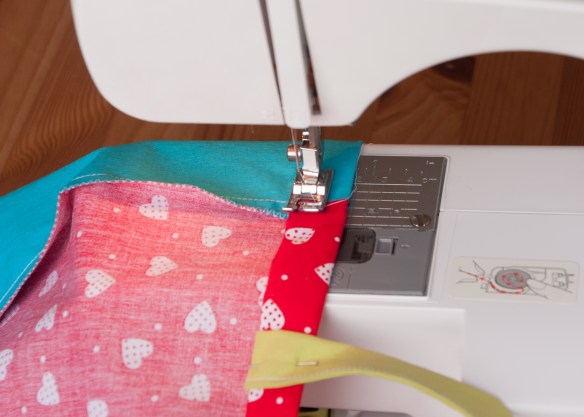
Stofftasche 19

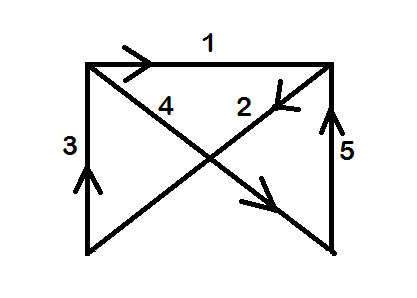
16. Now you need to secure those handles for added bag strength. I do this with a little x in a square on top of each of the 4 handle ends. It looks much neater if you do that on the right side of your bag, even though you can not see the exact position of the handle.Stofftasche 20
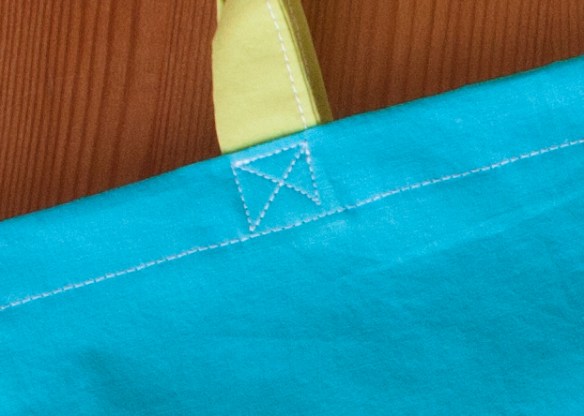
Since I am not only an amazing photographer but also an incredibly skilled graphic designer, I have made a little sketch, how I normally do it. Starting point is the top left corner, the end would be top right. Secure start and finish with a few reverse stitches.X Diagramm
Finished. Stofftasche 21

And just to show off the two initial ballet bags – they could do with a bit of ironing but come on, I have just spent ages putting together this post 🙂