Scrap Sunday: Dressed for night and day

I’ve got this custom order for teddy trousers a few weeks ago and could just not be bothered with the whole fiddly concept. But I have finally found the time (and it took two attempts – I hadn’t measured the little fellow and totally underestimated the size of his huge bottom 🙂 )

So, I have this fabric combination since three years precisely (more or less precisely). That had been another request from the same customer: Baby carrier (my idea) with aeroplane pattern (her idea). So now, the fabrics had to be used to make teddy trousers, using the one fabric for the front and the other one for the back.

And before you start laughing at the worn out bear in the picture I’d like to point out that it is actually mine, it just got somehow in the hands of a young teddy thief.

Here it comes:

IMG_2570

and from the back…

IMG_2571

and front again…

IMG_2568

and back again…

IMG_2569

4 pictures to show the tiniest trousers ever might seem slightly excessive but I guess it is a case of a biased photographer 🙂

And coming back to the actual subject of using up scrap fabrics: This has probably been the use up of the tiniest amount of fabric so far (for me, not speaking globally) so a well deserved Scrap Sunday project 🙂

long tail cast on

When I learned how to knit, the long tail cast on was the one that I had been shown. And for almost 30 years I had been blissfully unaware that there was another zillion of cast on methods.

Despite my then following ignorance of the qualities of some of the other methods (cable cast on or provisional come to my mind), I still use the long tail cast on for 99.9% of my projects as I find it strong and versatile. It is supposed to be done over two needles which makes it very stretchy, great for those lacy or stretchy projects, but if I want it a bit less loose (or if I am working with ridiculously big needles) then I will just use one needle.

For this tutorial, I have only used just one needle as I find it easier to get started. Once you understood the movement, you can do it over two needles.

I made this tutorial for my knitting class which is a mess healthy combination of English and continental knitting so it might look slightly weird to those of you who have learned knitting the continental way (considering my observations lately, it might actually be a German way rather than a continental but that is how it is called).

One last thing before we get started. Please remember that these pictures have been taken 3min before the all important football match. We will see if I will ever get the chance to replace them with better ones.

But for now, lets use what we have:

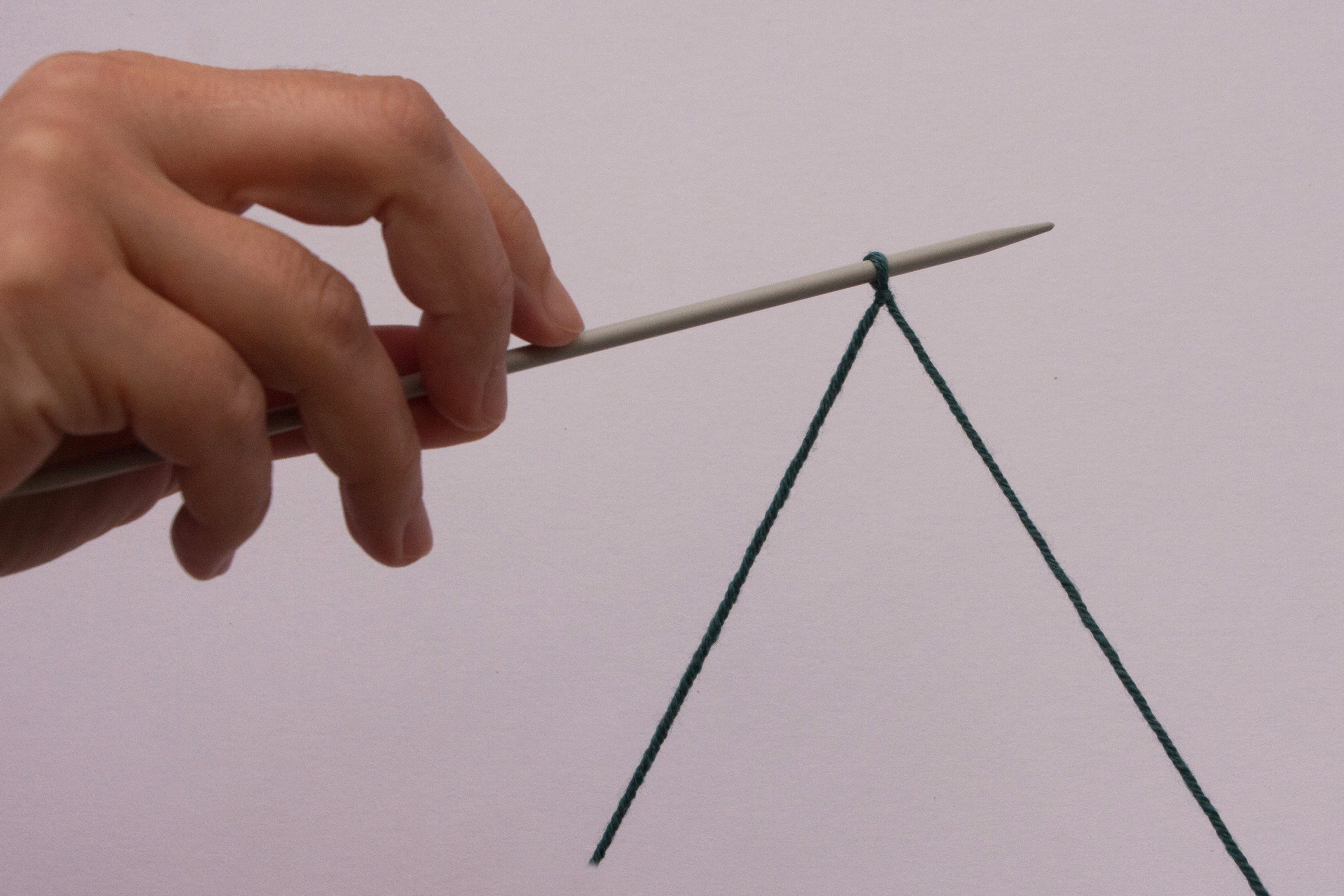
 1. Make a slip knot with a long tail end (the length of the tail will depend on the amount of stitches you will need) and put it on the needle. Hold the needle in the right hand, open the two tails up so they form a V- shape, the tail end comes towards you, the ball end goes away from you.long tail co 01

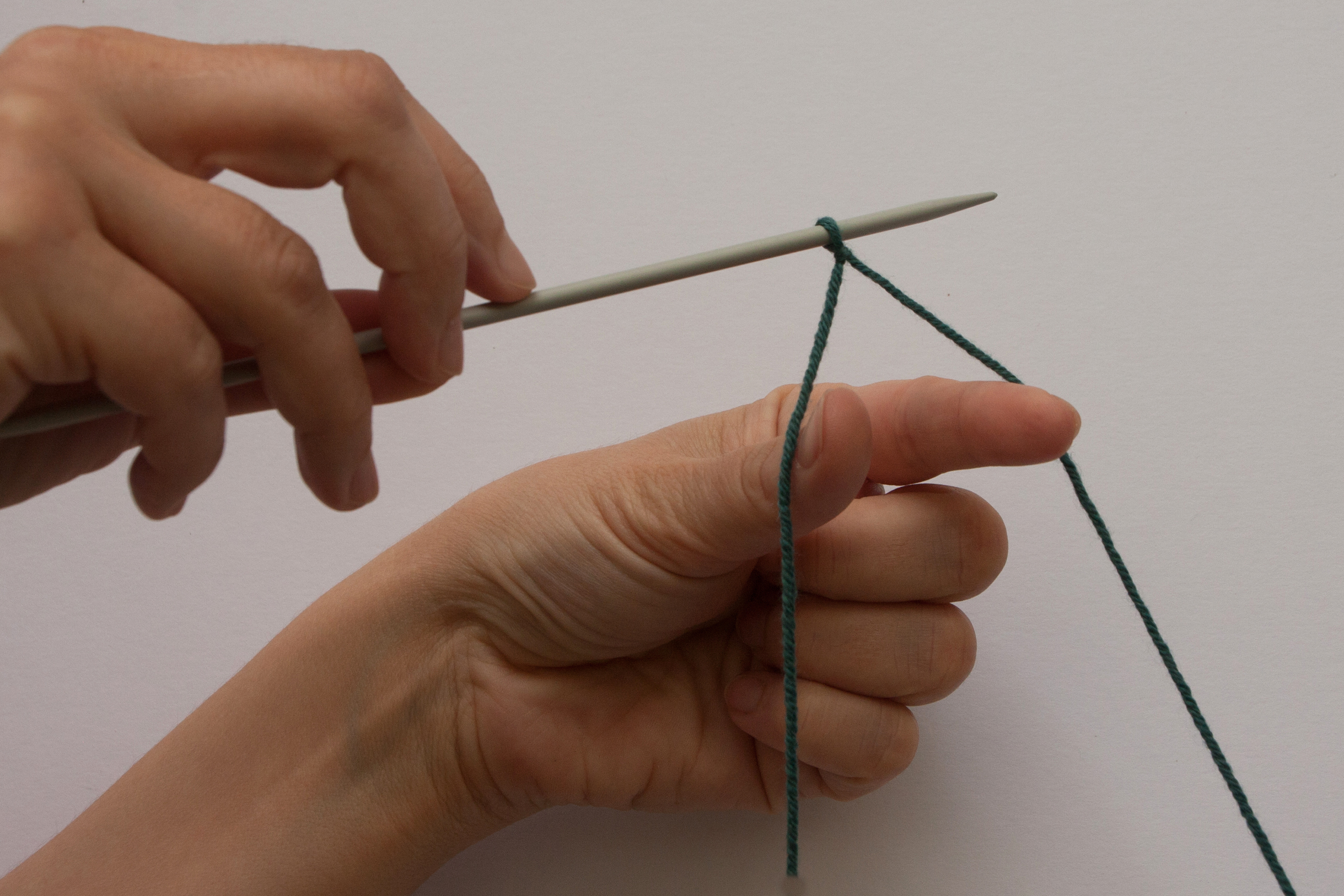
2. Slide the thumb and index finger of your left hand into the gap between the two strands and open the gap up a little bit.long tail co 02

3. Grab the two strands with the remaining three fingers and hold them tightly.long tail co 03

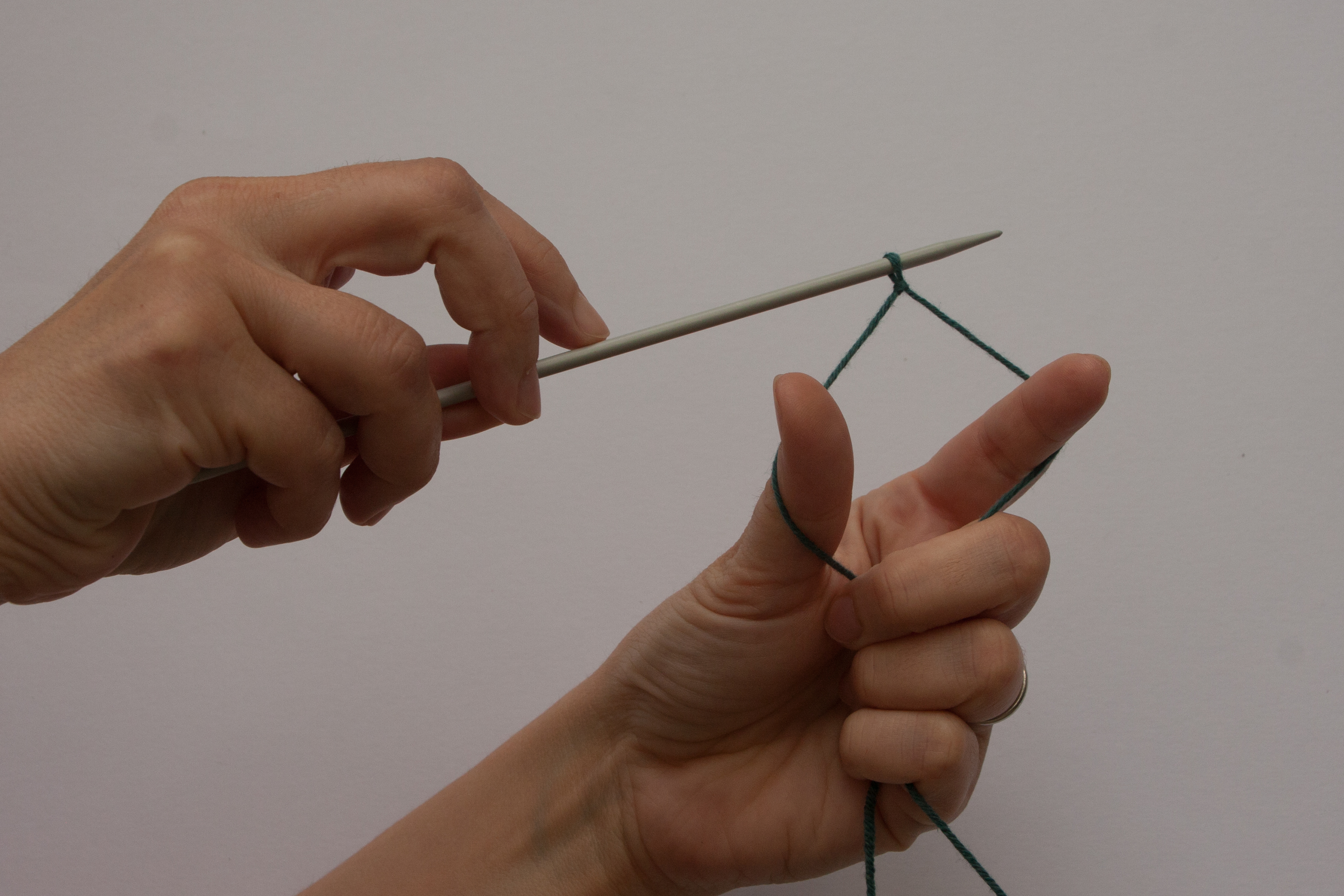
4. The needle with the slip knot should now be positioned between your thumb and your index finger. The tail end goes over your thumb (thumb strand), the ball end goes over your index finger (index strand).long tail co 04

5. Pull the needle down so the thumb strand forms a full loop around your thumb.long tail co 05

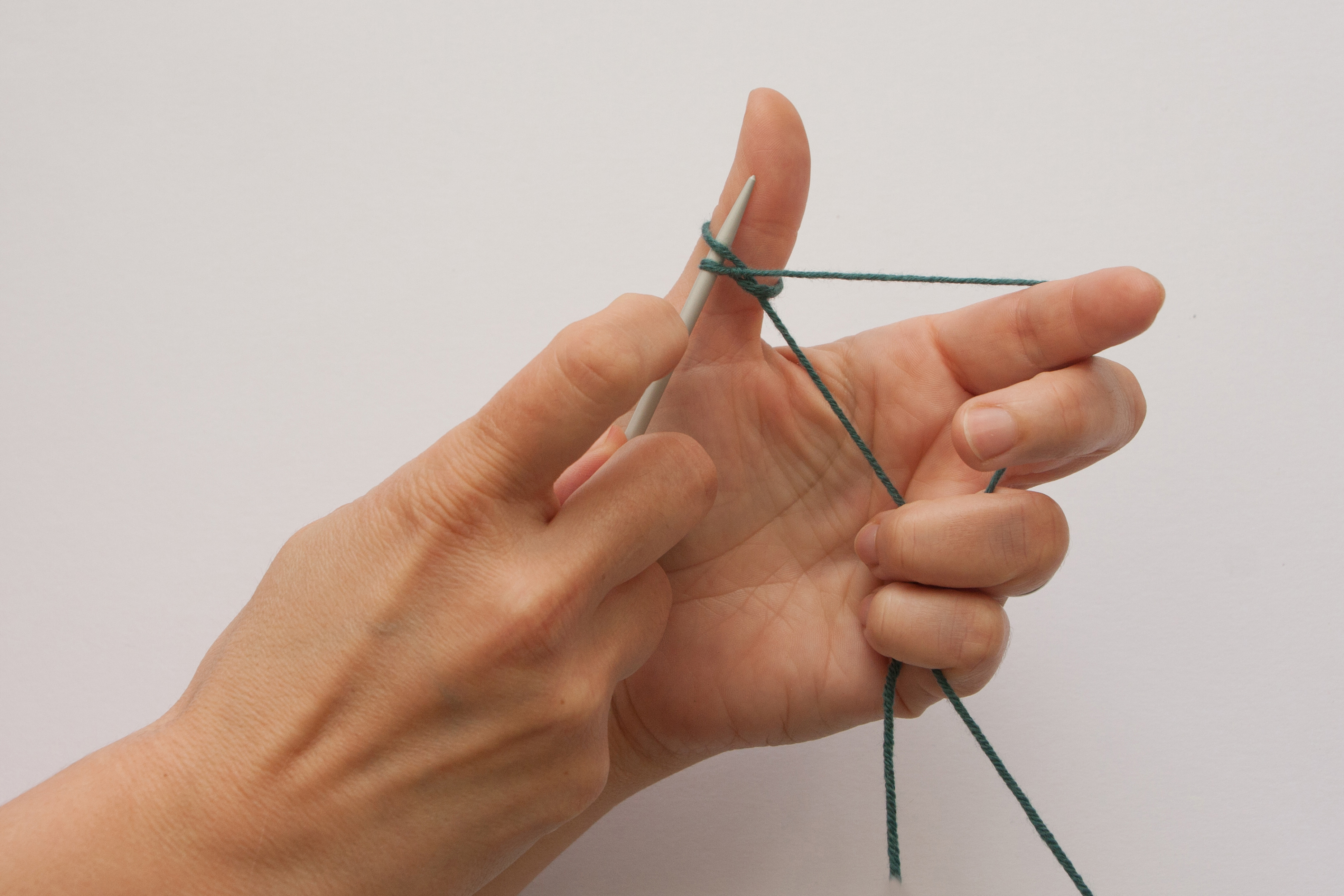
6. Slide the needle from bottom to top through the thumb loop…long tail co 06

7. …grab the index strand and pull it through the thumb loop.long tail co 07

8. You have now a new stitch on your needle. Release the thumb loop.long tail co 08
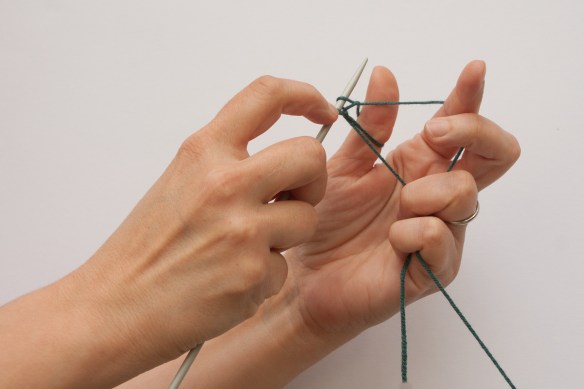
9. Push the thumb strand down with your thumb to tighten the stitch but do NOT let go of the two strands.long tail co 09long tail co 10

Start again from Step 5 by bringing the thumb up again and pulling down the needle. If you are working on a small scale with small movements, this will result in a smooth circular movement of your thumb and you will not have to set up everything from scratch.

As I have mentioned before, you should do this over two needles held together. You will pull one out once you have finished the cast on. This will result in a very stretchy cast on, ideal for something that needs to be stretched out.

back to school

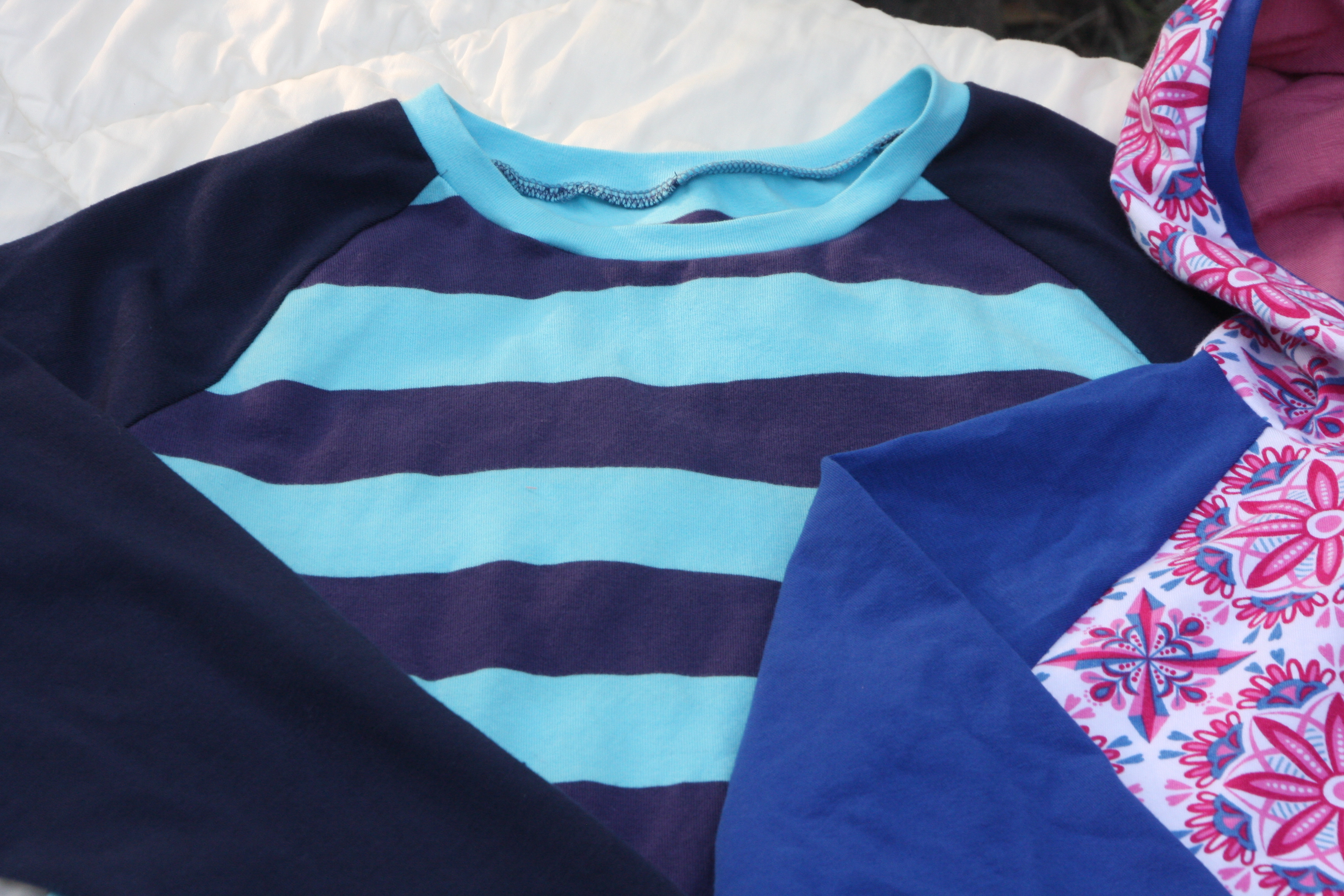
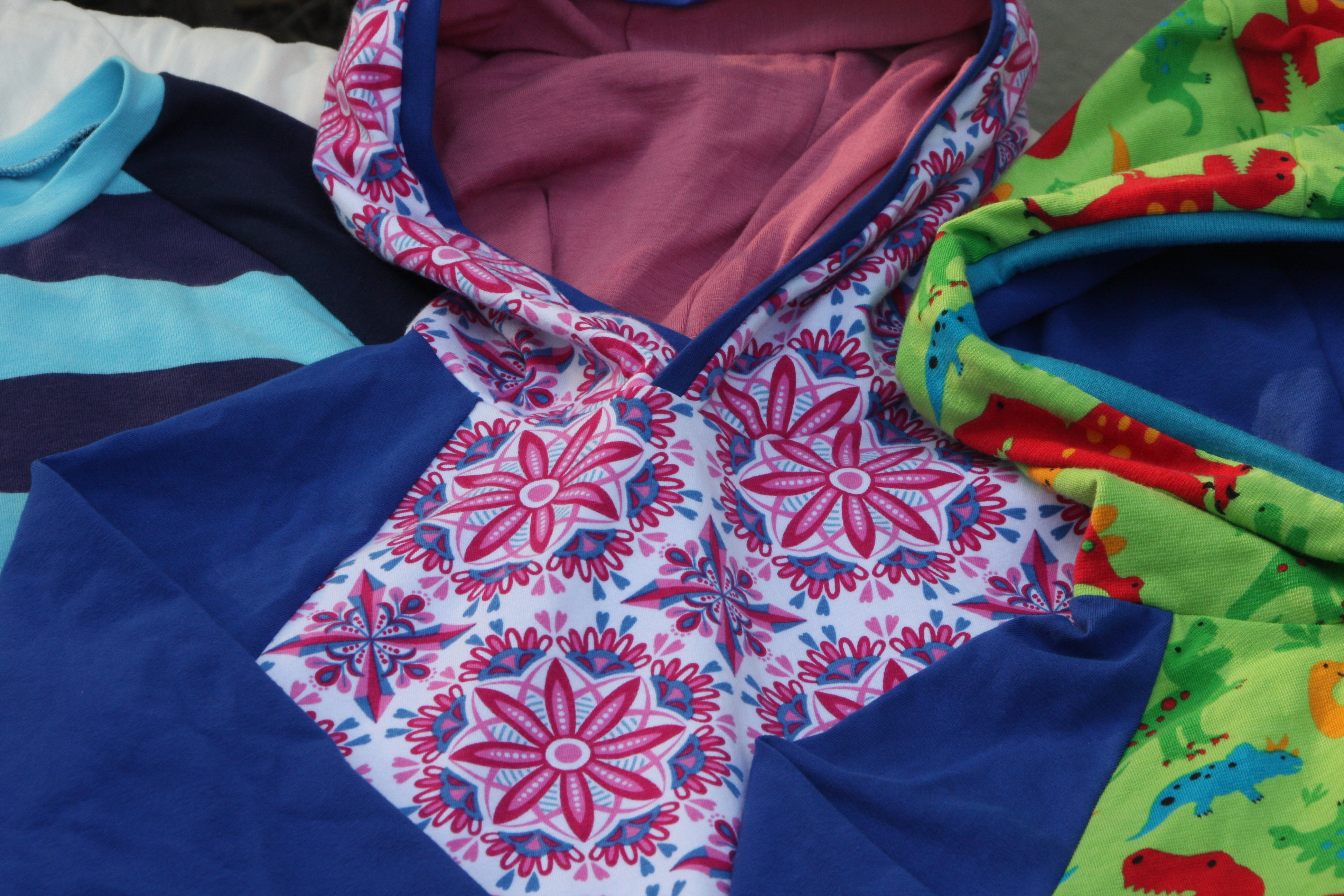
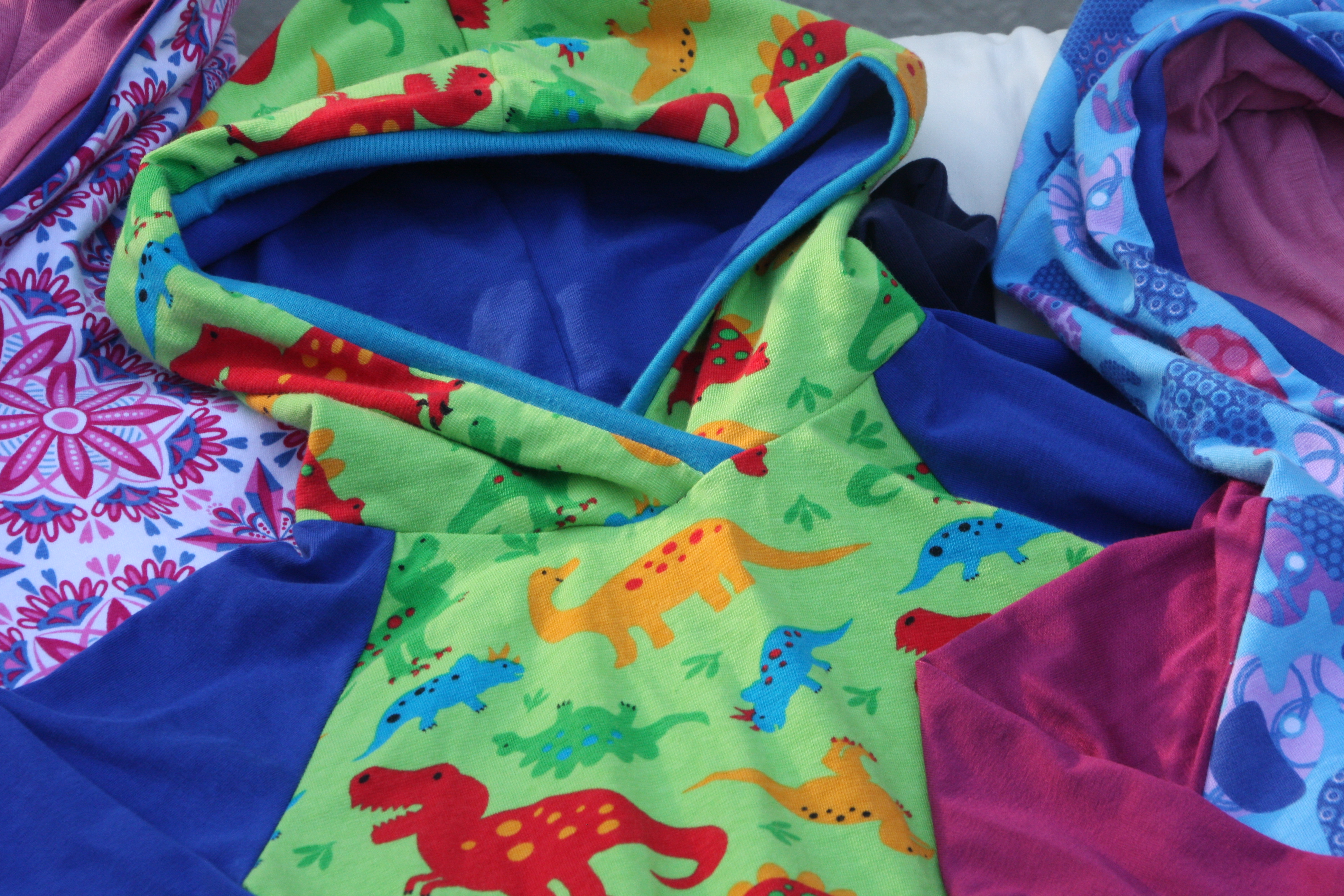
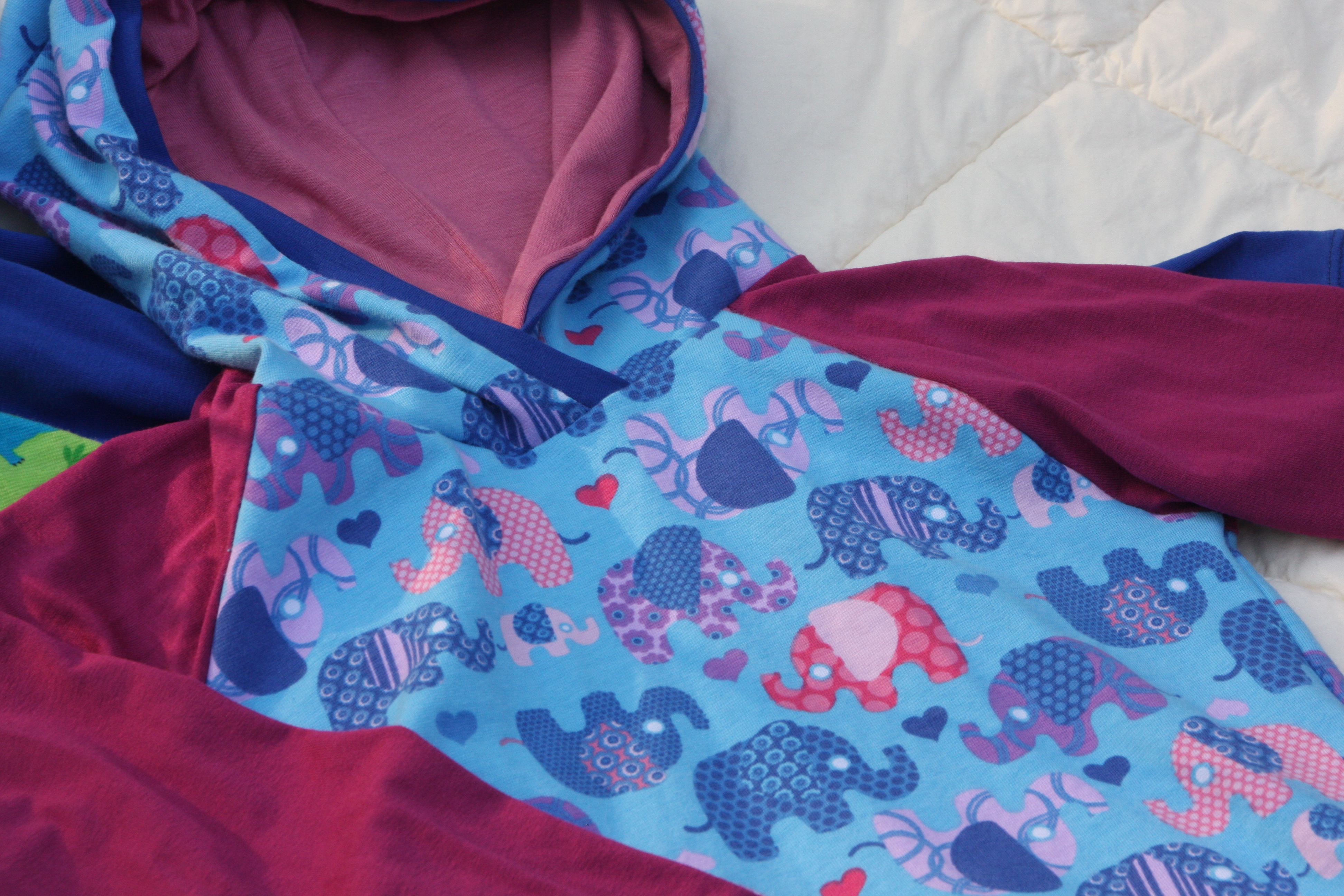
After my rather successful attempts of making these shirts for my children at the beginning of the summer, I wanted to practice more with my lovely shiny overlocker and made shirts for my nephew and nieces from fabrics that they had chosen themselves. For me, the start into a new school year is still linked with new clothes and so I thought it would be a good excuse to make all of them one with no birthday in sight.

I have used the same pattydoo pattern, with a little variation on the biggest shirt as my nephew didn’t want a hood. Goodness, a normal neckline is actually more difficult than sewing a hood on.

IMG_2331IMG_2335IMG_2334IMG_2333IMG_2332I wanted to wait with this post until they had received the parcel and tried the shirts on but as it seems they are delivered via snail mail and haven’t arrived at their destination yet.

I only hope that parcel didn’t get lost, that would be rather …ahem … disappointing.

I really love all the fabrics that they had chosen and I am thinking hard what to do with the rather little pieces that I have left….

Wer will mich – looking for a new home

Hello, hello, I am back.

I have gone all quiet since the holidays mainly due to a lack of inspiration…. which also resulted in two rather lukewarm scarf projects. Don’t get me wrong, the patterns are both lovely, I have used beautiful yarn in both cases, but I’ve got the sizing wrong and it is just not quite right for me and my neck. So I am thinking of finding a new home for them. A bit like Edith Klinger’s Wer will mich? for those Austrian readers 🙂

So, first of all, we have a lovely Trillian by Martina Behm – a narrow, slightly asymmetric triangular shawlette with an eyelet border in a luxury silk/merino yarn by Dye For Yarn in green tones. It is about 190cm long and 30cm wide at the widest point.

The problem I have with it is that it is not quite big enough (because I had much less yarn than suggested). Wrapping it around my neck only once, leaves long ends, but wrapping it around twice is not quite possible. Especially as it is asymmetric.

IMG_2327IMG_2344

The other lovely shawlette looking for a new home is a Lintilla, again by Martina Behm, again a slightly asymmetric, rather narrow triangle but with ruffles instead of eyelets. I have used a gorgeous bluish green 100% merino wool by Wollmeise but it is as well slightly too short (or too long, depending how often you want to wrap it around your neck). It is about 195cm long and about 26cm wideat the widest point.

IMG_2323IMG_2346

So, if you think that you are the right person to take care of one of these (or you know a person who would be able to offer one of them a good home), please leave me a quick comment, explaining why you are the right person and I will be happy to post it to you.

If there is more than one person interested in one of them, random.org will have to decide.

And if you are wondering why I keep knitting too small things: I guess it was a deadly combination of lack of commitment, lack of patience and lack of a good kitchen scale to wait for the right moment to start the end sections 🙂

After such a long break, the start of the new school term is a good time for me to take things more seriously again (I have already, just a bit behind with the posting). I guess I am still a teacher, going from september to september rather than january to january 🙂